
Mal Williamson
Chapter 4 Eye Movement Therapy and Cinema
Mal Williamson is an independent film director, changework therapist and academic researcher. He
combines therapeutic techniques with film-making to help capture our true natures. He has lectured
in media production and theory at Universities, full-time and part-time, and enjoyed much
community film work throughout Yorkshire, UK. Along the way he invented some interactive
telehealth products and ran an award-winning street drugs information business with central
government contracts – employing a team of coders, designers and sales staff. His films have enjoyed
some festival success so far and he continues to explore digital marketing approaches, as part of our
disrupted cinema industry. He runs the No Crew Film Festival – expounding that in these digital days a
film director can finally be a solo artist – akin to the painter, novelist or composer. Without other
agendas in the room, Mal aims to create a person-centred filmmaking experience for himself and
performers. You can join him on his new podcast Experimental Movie Director where he aims to discuss all these matters
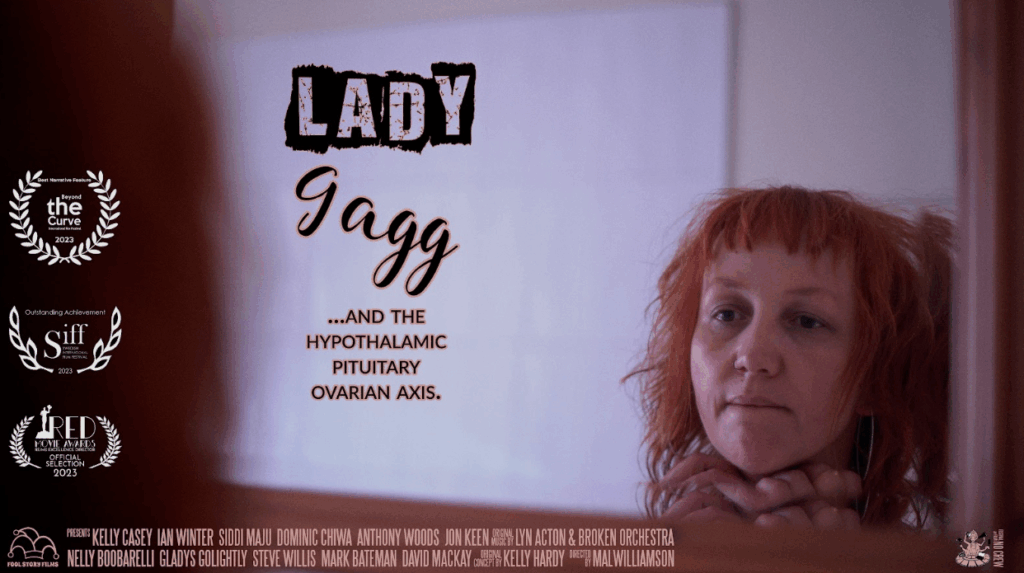
Figure 4.1
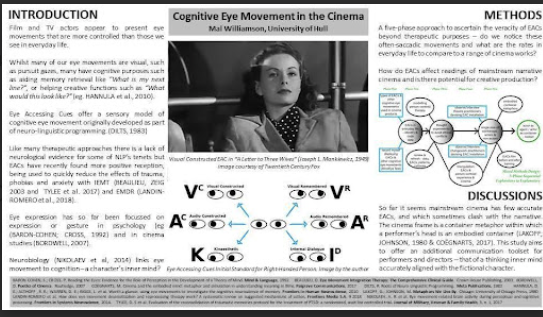
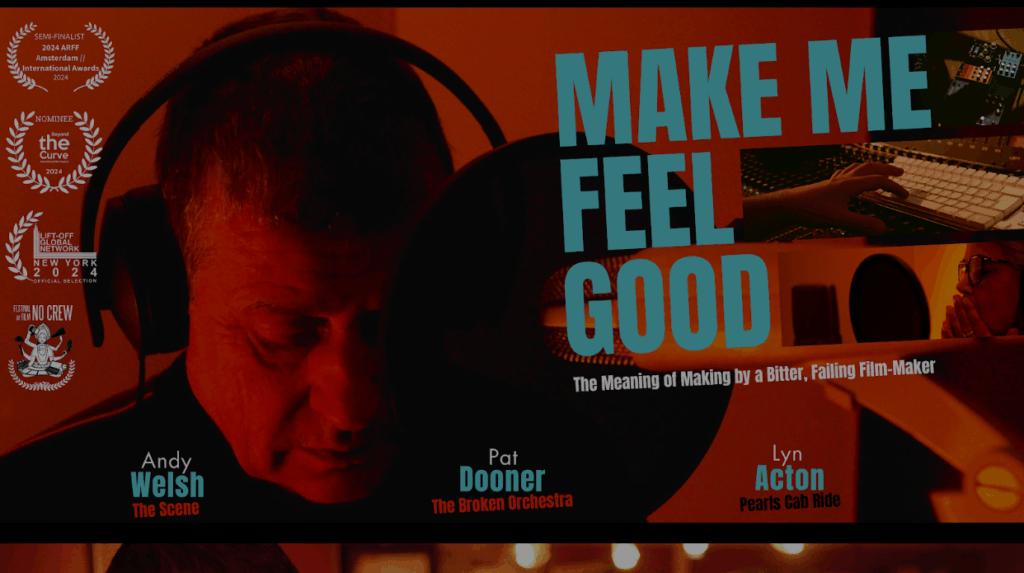
Figure 4.2
Ffigure 4.3
FEATURE FILMS






Podcast


Today in conversation with maverick #filmmaker and #director Mal Williamson. Mal is an experienced independent filmmaker from UK. He has directed and executed many projects including #shortfilms, #minidocumentaries and #featurefilms. He is also a certified #therapist. Here we discuss his feature film Under the Weather which has won Best Director in our MorArt Creative Film Festival, with 3m views on the accompanying Roku TV channel
Under the Weather was shot without any working #crew over the weekend. Mal believes – By removing a crew there is only one “system” operating in the room – artists working together. Under the Weather is based on #mentalhealth technique of #changetherapy. The essential element of Changework Therapy is… change. Let’s change the thing that is happening so you don’t feel that bad thing anymore. Now you are flexible to choose how you want to behave, or what you think about something. Your brain is back on your side – often in one session. Actor Gordon Meredith is one of the leading actors in the film. His performances include a number of short independent films and features, historical videos and stage plays. He also writes and produces his own historical theatre productions ‘Folk Theatre’ as well as online comedy short films which can be seen on Shift Key Theatre’s YouTube page. Mariana Barbera stars as the leading actress. She is a professional actress and writer living in Beverley. Her theatre credits include Lupe Lu in The Twilight Radio Show (Shift Key Theatre Company), Mariana in MissCast (She Productions), Mrs. Bedwin and Nurse in Oliver Twist (dir. Mike Friend), Dinner Guest in Sparrow (dir. Mike Friend), She in Leaving, Life and Love (dir. Richard Avery), Shakespeare’s Spanish lover in I Am Will (dir. Richard Avery).
Highlights of the Episode:
- Mal’s early life in filmmaking
- Why he shifted to feature film making?
- His inspiration to making Under the Weather.
- How does Under the Weather address the mental health issue and about Change therapy?
- What is change therapy?
- How does independent filmmaking differ from commercial filmmaking?
- Final advice to filmmakers and writers
Future Work
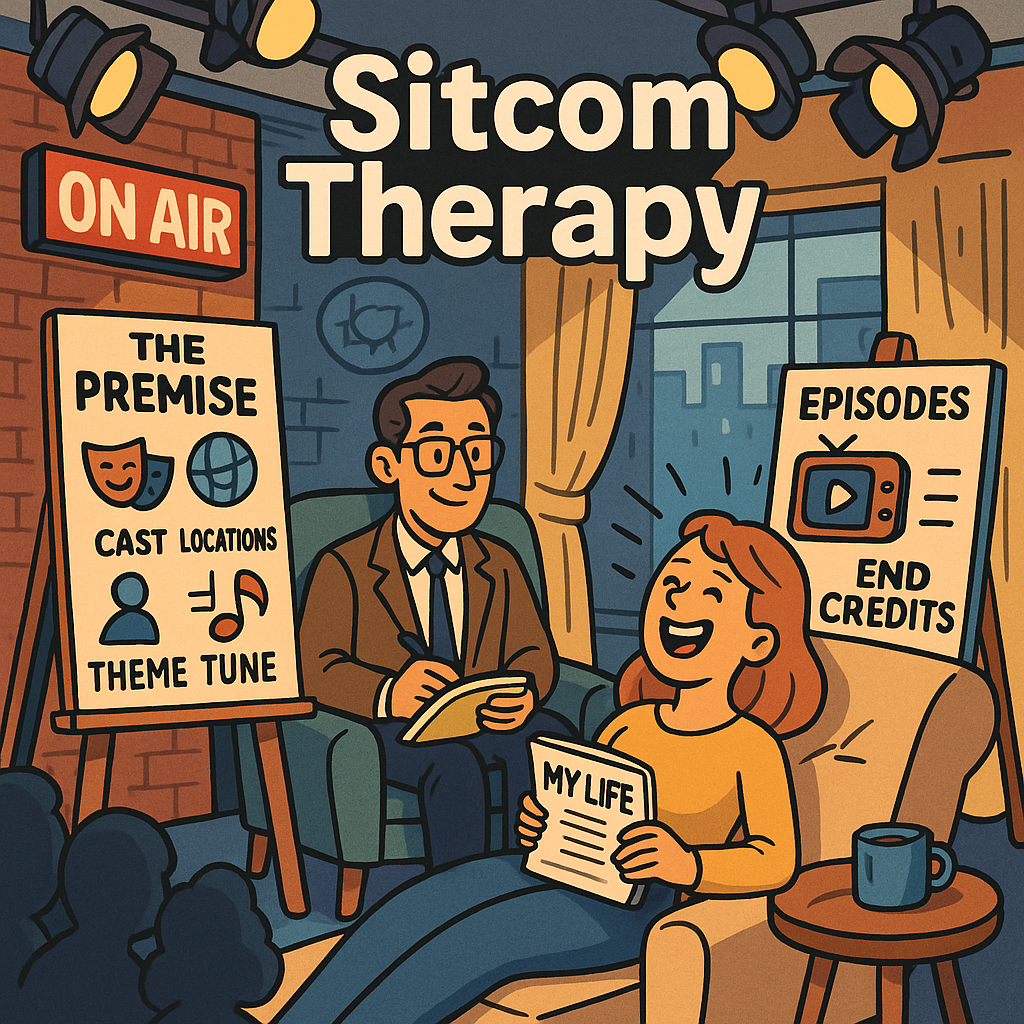
Sitcom Therapy
by Mal Williamson
Intro
This chapter outlines a concept for using the sitcom genre as a therapeutic opportunity. The text is based on a real session that took place between mysef and a regular client – where I believe my motivation was to make a breakthrough of a stuck perception of the client. Since this occasion we did not meet again and the client did indeed appear to make a breakthrough. Later I contacted her to request permission to outline and discuss the concept – as well as accept her contributions around how the session might be expanded. In each section below I include Jo’s brief reflections which show the progression a therapsit might expect.
Sitcom is a shortening of situational comedy and after starting on the radio emerged commonly on 1950s TV both here in the UK and the US. Like all genres definition can be a circular journey. This abstract from the Routledge Companion to British Media is a useful overview and begins our analysis of how the sitcom can relate to therapeutic interventions and framings:
“As is common for all genres, precisely defining sitcom is a problematic task. Analyses of the genre usually take a textual approach, attempting to delineate those characteristics which recur across those programs assumed to belong to that category. This is primarily to try and distinguish it from other, related genres: “On the genre dial it sits somewhere between ‘sketch comedy’ and ‘situation drama’”. Yet it is hard to precisely delineate the boundaries between these forms and it is possible to see a program such as The League of Gentlemen as both a sketch show and a sitcom, as it contains both episodic and series-long narratives, yet individual scenes function equally well as stand-alone sketches.”1
Do clients present stories to us therapists? As they talk and describe they also interpret and analyse – attempting to create a meta-narrative to the events and experiences, Certainly in my tradition of changework therapies I would wish to interrupt at times, picking up on useful sensory structures or re-framing opportunities, rather than allow the propagation of others’ interpretations. perhaps from friends and family, self-help books and memes, or of course other therapists. There is a strength and almost an ethical obligationto access what is original, in a quest for Gregory Bateson’s “the difference that makes the difference”. This may be revealed in a short account as much as a long tale of many intertwined motives and relationships. The blending of sketches and drama has resonance as we negotiate the client’s timelines and the hierarchy of events as they narate them.
“A starting definition of the sitcom might be “a short narrative-series comedy, generally between twenty-four and thirty minutes long, with regular characters and setting” (Neale and Krutnik, 1990: 233). The serial nature of the genre responds to the specifics of television broadcasting, according to which audiences return to situations and characters they know week after week, meaning that the pleasures of sitcom (like much television) can respond to the knowledge audiences have from previous episodes.”
Here we begin to understand the client’s circumstances. When we diagnose a condition, or more accurately perhaps, identify a set of symptoms – such as OCD or depression or anxiety – we may effect some useful change in their state, their responses, or indeed their behaviour. But we are still left with a client who most likely must return to those circumstances. And is it not the circumstances that support the negative behaviour? Can the common knowledge of a sitcom usefully help to re-frame those circumstances? Provide prompts for an alternative response behaviour? A reminder? And with an accompanying state break if the session can latterly induce a humourous response?
When working with inner dialogue a changework will often ask the client to speed up the words, then rewind, add some funny music – until a suitably dismissive and amusing response is created. Much more positive than the previous crippling effect of the memory. And similarly with the famous NLP fast phobia cure where this process is successfully used with moving pictures.
“…more recent genre analysis has instead been more interested in how genres function and how the situation in which “we all agree upon a basic understanding of what a sitcom is” comes into being.”1
How is always a useful green flag shall we say – how is the client producing this response, so we can work on stopping it occurring. The understanding of why may be wanted after this of course, but is often already known to a client who is aware of triggers, events and memories that have created certain responses. Changework therapy is about removing that response and freeing the client from unuseful behaviour.
“It is precisely the assumed obviousness of sitcom as a genre, aligned with the perceived naturalness of the humor they contain, that means they are a ripe site for unpicking highly constructed social norms because it is often wrongly assumed that such straightforward entertainment “doesn’t require us to think”1
Sitcom Therapy, if this chapter announces such a proposition, can indeed work because the idea of a sitcom is generally known, and regarded with affection, engendering a range or positive responses – without the need to think, overthink, or access irrelevant events. The path is clear for a client to experience their circumstances with the opportunity for a direct experience of a postive state like amusement or light-heartedness. Further research would test this more reasonably of course, but the author expects therapists to be mostly in agreement that such inner states can help develop a client’s ongoing resilience to their circumstances, while they work positively to change them, should that be necessary or desirable. So how might we set about converting a client’s circumstances into the genre of sitcom?
The Premise
A quick search online will uncover many many approaches to script development for film and television. There are gurus, innovators and successful mainstream screenwriters developing healthy sidelines by selling their methods to the thousands and thousands of aspiring film-makers looking for secrets.
One of the problems identified by Batty et al is that a script has many varied functions and purposes – from the obvious aim of producing a great finished screen product, to raising funds for the screen product to be made in the first place, by providing an industry-focussed blueprint for production which would enable budget, casting and scheduling information to be extracted as well as engaging and encouraging other creatives from directors to performance to composers and these days to AI and SFX specialists.
This is partly why scriptwriting research is presnted by Batty et al. as a wicked problem, where the solutions are amongst other things characterised as one-off, never true or false and with no definition to start from.
The Premise, as I picked up when teaching at the Channel 4-funded Sheffield Independent Film in the 1990s, has always been a touchstone for my work, whether dramtatic and creative, or promotional and commissioned. Three quick sentences:
1 – what is it, what happens, who are they?
2 – what genre, style, mood?
3 – what audience, who are they?
At best this is a distilled essence of the film-to-be, the writing through a stick of rock, and the visible in every scene and shot. A premise is a beacon when lost, so does require some initial deep thought to be certain of navigating you through the storms of script development and production.
After the premise, one might write the Treatment which adds more detail in a couple of pages or so. Beyond this a screenwriter might develop a Synopsis which will take us scene by scene through the film. The premise is also a technical tool, in that it can be realtively quickly written then forgotten – until circumstances, cast, or funding makes it a potential produciton… and a treatment or synopsis are developed within the scope of this opportunity. One premise may be developed in different ways – characters adopting different behaviours from one version to the next for isntance. Or different locations, different creative trends, new technologies can be brought to bear on that original idea, carefully defined into the essential premise.
Therapeutically, the premise is the ambition made real, a purposeful and achievable ideal one might say. For sure it describes realistically and with useful insight the current circumstances of a client, and then integrates the direction of travel, the preferred states, the desired outcome.
1 – what is it, what happens, who are they?
A client often needs support to address their needs and recognise the factors at play. In a stressed life or disintegrating relationships or economic hardship or mental health impacting in myriad bad ways we aim to encapsulate the essence of this in one sentence. It may be a long sentence ha! Feel free to use commas a-plenty to list the facts and do not be too concerned about accurate grammar. This can be a creative and even poetic sentence.
In the langage used information emerges – preferred sensory representations, unhelpful metaphors, and what NLP calls meta-programs ie the away-froms vs towards, external vs internal references, matcher or mismatcher? Much information can be easily elicited in this process – and you may already be happy to engage in re-framing if you have a prior experience of the client.
Who is there? The main characters involved and a brief relationship status perhaps? Who is your client? Can she take on a different identity in these scenarios? Anything may usefully help by way of dissociating the client from painful aspects. Add silly voices to these regular characters in our lives. And prompt for any secondary characters who pop up from time to time – the visits by in-laws, bullies and helpful friends or colleagues. Make notes of particular scenes that may be later explored.
2 – what genre, style, mood?
So what about the mood? We are here to laugh. To make light. To take control of the script. This Sitcom Therapy proposal offers the chance to transform mundane or challenging situations into a comedy. What is typical and what can be exaggerated? If each day starts the same for instance we can exaggerate this to a comic scenario. A habit can be used at odd moments – to scratch, to panic, to clean, to be angry or cry. A client may reveal more of their daily life in this light-hearted and indirect conversation than in some serious questioning.
The therapist is strong by the way – this is not the time to resonate and sympathise but to use the sitcom metaphor as a constant position of steadfast belief in the better future. Unshockable and capable fo laughing at your client’s monsters. Yes – I agree that might be very unsuitable so avoid hurting people. I trust a therapist to gauge their relationship, moulding to the client’s needs. The sitcom proposition allows you to stretch that without being cold or dismissive of the client’s needs. But we have heard it all before yes? We do not place our surprise and conceptions and emotional responses upon the client. Here we are also TV executive – enjoying or objecting to various interpretations and always looking to help inspire new ways of looking at the circumstances. What comedy is this like? A useful shared reference can add clarity and colour to the imagination for client and therapist, promoting understanding and assuring communication is taking place. And you may suggest alternative shows that this is like – inviting the client to try different ways of looking at their world.
Remember that laughing is useful. A marvellous state to interrupt prior story-telling with prior therapists and well-meaning friends. This is about break-state possibilities to help a client the following day.
3 – what audience, who are they?
Often a client has people in mind – a work situation, particular family members or close relationships, old school friends? “I’ll show them!”. Or is there a general progression that is desired – so their audience is in education, an industry career, out and about socialising?
Feel free to suggest typical media audiences. What time of night is it for? Or is this morning TV? A cheap soap for ease of avoiding tensions? Or an innovative award-winner to add social status to a client who will benefit from more personal esteem? Is this an adult sitcom for kids? A family show or a drug-abusing sex-romp?
Which channel is buying into this too – perhaps societal factors and impressions are important for your client, in that they see their life as significant or not so much. This can help match their references to their edcational and economic background so it remains relevant and insightful for them, whilst also using our shared media awareness to enhance the mutual understanding. And by the way – we never had to explicitly ask for this potentially relevant information.
The Premise is a great start to the Sitcom Therapy, eliciting without overt analyisis or spotlighting clients who may be reluctant to talk or oeven worse – so very keen to share enormous amounts of confusing histories and supposed cause-effects that re-inforce their conceptions and misconceptions which make it hard to make any impact on their world view.
Jo’s Reflections Now: fulfilling life / energy/ being happy / self-esteem / cut drinking / sleep routine
The Cast
Let’s audit the client’s relationships.
Many therapists will have their favourite way of doing this so certainly use it – as quickly as possible. It is useful to get all this laid out in the one session so we are wanting first impressions, the inner information.. and without too much detail that might re-inforce the current non-useful behaviour and perceptions. In and out quick.
David Grove was a consummate psychological developer who was working on improvements to his innovative Clean Space when he died in 2008 aged 57. I have used a version of this to ask clients to place key people in the room. Where are they and what do you notice? This is a more direct link to the relationships rather than encouraging the client ot be a writer and creating more sureealities. Directly where are they – what does that mena for you? Who else and where are they? Good mapping technique and super-quick. Apologies for grabbing just a touch of the Clean Space subtlety and impactful transformation, and the ground-breaking Clean Language too. There are a few trainers and many books should you wish to explore further.
At a training session with Nick Kemp and Doug O’Brien around 2009 I was shown another technique for eliciting realtionships – assorted coins. I use this with children to help them access their complex relationships – by placing a pile of different-sized coins on the table or chair. “OK which one are you?” “And which coin is your mum? Put your mum in relationship to you.” Et cetera through friends and family. This results in a quick mapping of their statuses, distances and closenesses, spread out on the surface. Whilst it is happening the client may offer explanations or not, depending on their preference. Which makes it quick and fair, empowering, non-interventionist.
Both these methods work and I would love to hear readers’ ideas too. Is it accurate? Does that matter? We can change as we go – just as the essence of the premise may grow into Treatment and Synopsis. You as TV Exec can suggest alterations later this session or in other sessions? And the client too will be perfecting their sitcom.
Creativity is extremely pleasurable so the process gathers its own excitement from the calm observations and reflections.
Jo’s Reflections Now: all changed now – ghosted and that – abandonment – rejection… could be people from the past (not very funny)
Locations
Where is this happening? The home in different rooms, workplaces, outside locations? And crucially perhaps, what is happening in these rooms and palces? Are there moods that repeat or could be better managed with music, lighting or house rules. This might also give detailed schedules and daily habits that can be re-inforced or changed.
An easy list to make and also easy for a therapist to suggest changes if the client doesn’t. With more application of psycho-active spaces á la Grove a lot can be gleaned from this information and consideration. At this point you can return to the premise to remind client and therapist of the intended direction – where the sitcom is at the end of the series. ANd where is the client now hanging out?
You may both be alerted to trouble hotspots so the interactions with people there could be relevant and also amenable to family therapies or Transactional Analysis approaches. Play to your strengths, follow the money!
Maybe you should add a Budget heading to this actually – especially for clients who need to practically consider the expense of further therapy sessions. And how do they afford the new house, the move to another town or area of town, a holiday, get out in the countryside or the local park. Are there new workplaces to visualise?
Explore and exchange the sub-modalities of the visuals here – the impressions of different rooms can be altered with effective visual techniques. Or auditory ones too of course. These techniques and other powerful quick transformations are outlined by Richard Bandler and Paul McKenna.
Jo’s Reflections Now: Kitchen – Cut drinking – put bottle in cupboard Dining Room – Being Happy (guitar) Front Room – Energy (PS4 riggerjigged) Larkins Bar – Fulfilling life Bedroom – Sleep routine, valerian, Baileys milkshake
Theme Tune
Music therapy has been around as a discipline since the mid-twentieth century and has developed from a psychological approach to having great synergy with neuroscience and specific medical applications . Cognition and perception are particular interests of the neuroscientists and there is overlap into sociological aspects of listening to music.
Much is concerned with mood and emotion – which probably comes as little surprise to the everyday population! We know music. As therapists we are looking to help so want a positive valence from the affect – terms explained in useful detail and clarity in Lisa Feldman’s Barrett recent best-seller reviewing modern insights into emotion that aims to correct our social, cultural and even scientific misconceptions.
The theme tune has also been around since the mid-twentieth century so is a commonly known cultural artifact, easily available to your client’s understanding. One advantage of Sitocm Therapy as an approach is its speedy application, without explanations of the process like some therapeutic interventions that might inspire requests for explanation.
Ask the client to pick a tune, song or piece of music as a leitmotif for their sitcom. We are looking for something which engenders a pleasant smile and preferably laughter, so that when the client recalls the internal audio in their life a mood change is experienced. Negotiate with the client when they might recall this theme – coming down the stairs, entering the office, in the middle of an argument? Let their appropriate them become a quick replacement for unhelpful internal dialogue, an interruption to the affect-response that Feldman alerts us to.
“Scholars and scientists have confused affect and emotion for centuries.”13
There is a cognitive aspect to our interpretation of the feeling that we want to take advantage of by inserting a powerful sensory access of music full of social and personal associations. The theme tune is an intervention tool for the client’s ‘emotional’ response to their circumstances, creating an interpretative awarenss that can become part of their resilience.
“Many scientists use the word ‘affect’ when really they mean emotion. They’re trying to talk about emotion cautiously, in a non-partisan way, without taking sides in any debate. As a result, in the science of emotion, the word ‘affect’ can sometimes mean anything emotional. This is unfortunate, because affect is not specific to emotion; it is a feature of consciousness. Affect occurs in every moment (whether you’re aware of it or not) because interoception occurs in every moment.”13
Jo’s Reflections Now: what was it????
Episodes
When working on any of the prior elements there may have been instances and examples emerge that can now be transformed into inidividual episode ideas. This will have been useful to keep focus on the particular therapeutic process – “Brilliant – let’s work on that later”.
Episodes need a title to encapsulate the particular narrative or event and make them easier to refer to – so let’s have titles that can re-frame, enlighten and amuse. This may help clients to stop repeating theses scenes either internally or in their everyday behaviour – a sart title locking away the episode. As Dr. Richard Bandler says often “The best thing about the past is it’s over”.8
We can help a client move forward by shuffling the episodes from the client’s prior experience towards their intended futures. What do you want? What would be good? What wuld be a different response to that situation which could make a great episode towards the end of the series? Adding detail and atmospheres, cast characters and locations will help to discover the difference that makes the difference, accredited to Gregory Bateson and used widely in therapeutic training.
Reviewing, or creating, these episodes will enable discovery of the client’s timeline approach – which I find is usually in time where the past is behind and the future ahead, although many will also be through time with events lined in front of a person from left to right. It is said that these people have a stronger gestalts, where collections of similar events combine and are magnified. Whereas In Time processors have only the future in front of them so are they more aware of future possibilities.
A read of Tad James’ excellent “Time Line Therapy and the Basis of Personality” will provide therapists with new exercises to work with clients’ models of time and provide meaningful re-interpretations.
I always find Time Line Therapy powerful for initially unlocking issues or cementing the change achieved in a session. And particularly useful in that it does not require too much sharing of memories from the client, or needing them to articulate their struggles. The work is embodied and internal, either involving physical walking along a timeline or internal trancework with eyes closed.
Here in the Sitcom Therapy model we are aware of the psychological power of timelines and aim for plenty of future episodes that keep attention on the desired transformation.
Finally, resilience is often the last stage of a traumatic experience, and Sitcom Therapy may help a client to look forward to the last episode, or to appreciate the last episode of a previous series, in order to promote and emphasise the closures of a narrative and the recognition of its learning.
Jo’s Reflections Now: Shit Roulette, Pretend to Drink, Songs Library on Alexa, Read Books
End Credits
A person may have different roles in our life. I am grateful to my parents for the education regime our family shared, but not so happy that this did not include themselves so much, who preferred emotional distance and authoritarian control. In my Sitcom Therapy I can credit them with these different roles; Project Managers – Mum & Dad, Corporal Punishment – Mum & Dad etc.
Note you can begin with commonly known TV and film roles – Director, Producer, Gag Writer, Choreography, Special FX, Stunt Co-ordinator. Then move to yours or the client’s particular credited roles such as mine above. And how about this new one – Intimacy Co-ordinator – my first girlfriend!
All good opportunities for discussion of course, and by this time in one session you may have more idea what will take longer to unpack. We are getting a great overview and mapping of the client’s situations here and can ideally keep it light and allow that to drive the insights. Brevity can enable a safe situation for a client to share, who may otherwise want to avoid overloads of emotions and thought, so I would want to resist the temptation to delve further before a list is complete.
However, this is a perfect opportunity to write more notes, gathering as much information as possible without the client wondering what he has said now that is so significant to us.
Remember too that you can roll the Theme Tune with the credits – checking the choice makes sense still and induces the appropriate mood.
How useful is gratitude in a therapeutic intervention? This may already be a useful part of your process although I am wondering now how come it is not a regular aspect of my approach?
There may be new cast members emerging as a hopefully enjoyable reflective session brings new insights and new events to mind. Sometimes the closing wind-down of a session may be where abusers emerge or other significant and long-forgotten or buried experiences are alighted upon. And the client may be beginning to be aware of other issues that may be influencing them, so want to make note of this for further sessions as they become empowered by their own sitcom being created.
Jo’s Reflections Now: alcohol
Outro
Jo did not book in for further sessions after this. The next I heard she was engaged with successful alochol abuse therapies and has now become a trained alcohol counsellor herself.
I have already mentioned the possibility of a Budget element and have also considered these additional metaphorical sections to Sitcom Therapy: Plotlines, Marketing Posters, Advertising Bookings attracted to this Sitcom, Critical Reviews by professionals or friends, Distribution by sharing with family and friends, Scripts where a client writes it down, Production by making a scene or a Trailer…
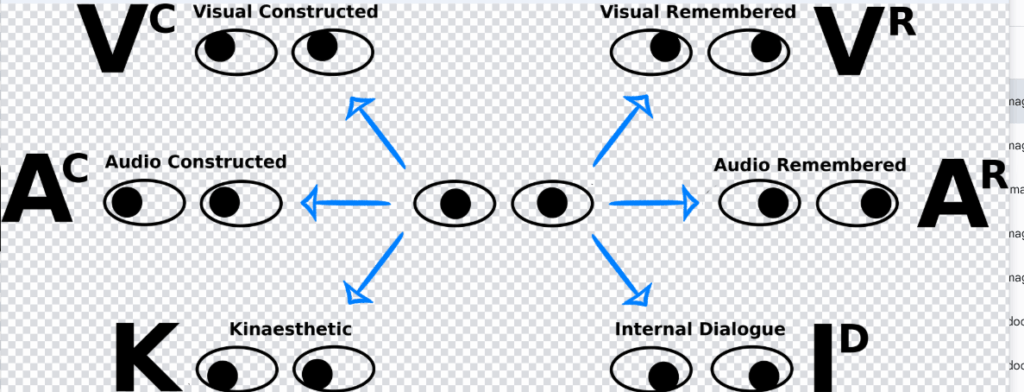
I am less sure of advantage of casting roles with celebrities. Integral Eye Movement Therapy has marvellous identity work I am using often these days, and I feel that exchanging the actual Cast who a client knows will begin to break apart their world and even ascribe different motivations to their cast’s behaviour or statements? The media metaphor may work against the truth or the re-framing of their circumstances and obfuscate when a client needs clarity.
Sitcom Therapy, as proposed here, is aimed to enable a client to understand their life, not falsely adjust it to so they can cope. Resilience is about the reality of our internal processing and the result of our experience, not the perception of our memory’s distortions, deletions, generalisations… and other Erickssonian memory insights. Resilience can be celebrated with the sitcom’s final episode.
I more readily appreciate ascribing silly voices to cast members that may add humour and undermine the prior negative impact of people in their lives. This would be similar to the speeding up and reversing of unhelpful internal voices, and adding comical music to them, from the NLP canon of sub-modality work.
Is this model of Sitcom Therapy only for changework practitioners? I do not think so. You will have your own ideas for eliciting information in all of these sections. By using your favourite techniques Sitcom Therapy offers the chance to apply many tools in one session, identifying what works best for them, and also conduct an informal and effective mapping of your client’s everyday world.